

Buy Me a Coffee
Illustration depicting simple and elegant Go code with clean lines

[Golang] Writing Elegant Go Code Without Overengineering It

If you’ve been working with Go for a while and find your code resembling a plate of spaghetti, rest assured you’re not alone. This is a common challenge many developers encounter over time. The issue often isn’t a lack of design patterns or frameworks, but rather the misuse of abstractions at the wrong moments. Writing elegant Go code is about increasing readability, not demonstrating cleverness. This post outlines essential principles to transform complicated and tangled Go code into a cleaner and more maintainable form—without drifting into complex “enterprise abstraction soups.” ...
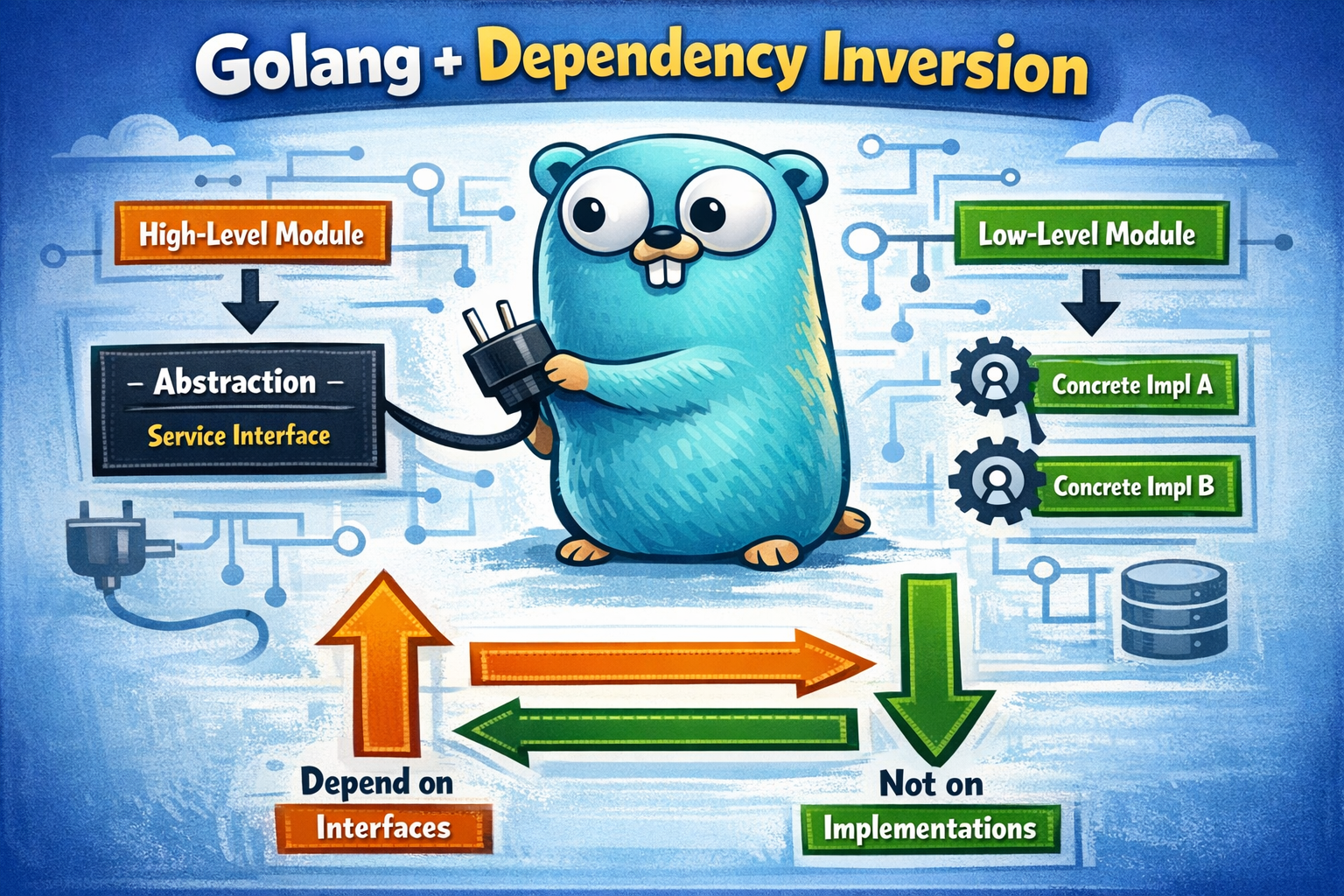

Illustration depicting the concept of dependency inversion in software design

[Golang] Mastering Dependency Inversion: Keep Your Go Code Clean

Dependency inversion is a fundamental principle in software design that enhances code cleanliness, maintainability, and extensibility. While not exclusive to Go, the way it manifests in this language is particularly accessible and effective. At its heart, dependency inversion asserts that high-level components should not rely directly on low-level modules. Instead, both should depend on abstractions, fostering a more adaptable architecture. In practical Go development, this means crafting your business logic to interface with small abstractions that express what functionality is needed rather than focusing on how that functionality is implemented. This post dives into how to leverage this principle in Go, highlighting potential pitfalls and offering concrete examples to demonstrate correct implementation. ...

DigitalOcean Referral Badge
Sign up to get $200, 60-day account credit !